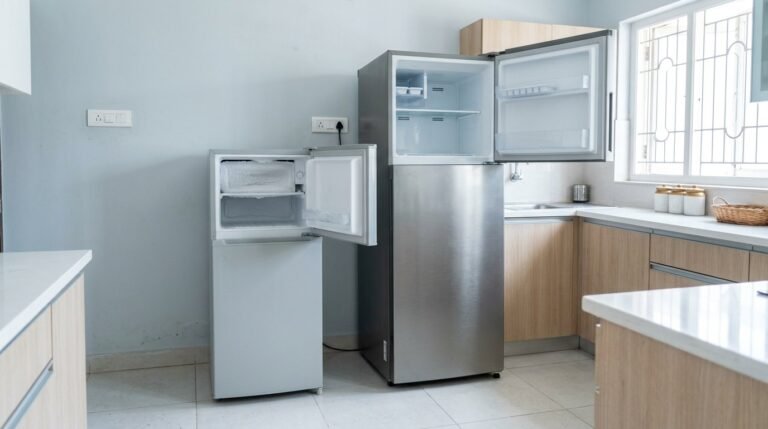
How Do You Remove Smell From a Fridge? What Bosch, Samsung and Haier Each Tell You to Do
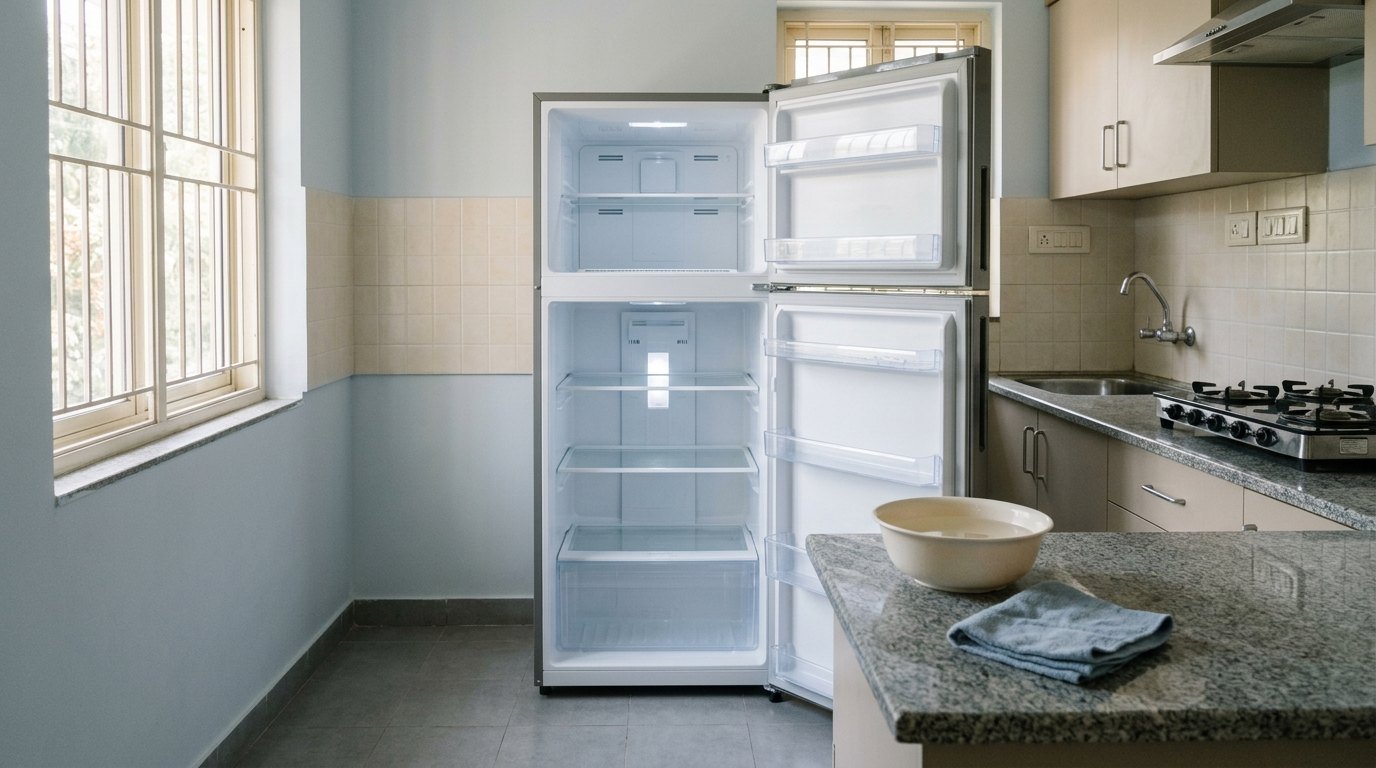
Bosch, Samsung and Haier India each publish fridge-cleaning instructions; they agree on the basics, contradict each other on the rubber door seal, and this page sets them side by side.
 Samsung 256 L 3 Star RT40H30U3THLConvertible, Digital Inverter frost free double door₹32,000Amazon, 8 Nov 2026★ 4.2Check price ↗
 Whirlpool 235 L 3 StarFrost-free inverter double door refrigerator₹27,000Amazon, 8 Nov 2026★ 4.0Check price ↗
 Haier 190 L 5 Star HED-205DSA-PDirect cool inverter single door refrigerator₹16,600Amazon, 8 Nov 2026★ 4.0Check price ↗
 IFB 197 L 5 StarAdvanced inverter direct-cool single door refrigerator₹18,000Amazon, 8 Nov 2026★ 4.0Check price ↗
Quick answer: unplug, empty, wipe the inside with lukewarm water and a soft cloth, clean the removable parts and dry everything. Samsung publishes every step of that core; Bosch publishes the unplug, empty and wipe steps. The split is the door seal: Bosch says clean water only, because cleaning products “will erode it”; Samsung says warm water on one page and a mild detergent on another; Haier says vinegar and water in one blog and warm, soapy water in another. For the seal, your own manual wins.
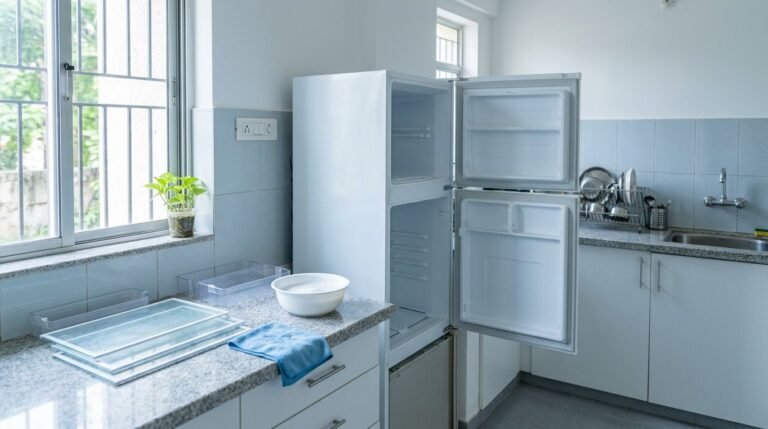
Steps to remove smell from a fridge, as the makers publish them
Steps 1, 2, 3 and 5 are each published by at least two makers. Steps 4 and 6 are Samsung’s wording.
- Switch off and unplug. Bosch: “The safest way is to unplug your appliance or turn it off at the fuse.” Samsung: “first of all, unplug the power.”
- Empty it and throw out what has turned. Bosch: “Remove your food and store it in a cool place. If you have an ice pack, place it on top of the food.” Haier says to throw away expired items and check fresh produce for signs of decay.
- Wipe the interior with lukewarm water and a soft cloth. Bosch and Samsung both name that pair; Bosch adds a “pH neutral cleaning product”. Samsung says to do this “twice a month”. We found no cleaning interval on the Bosch, Haier or Godrej pages we read.
- Clean the removable parts. Samsung: “Take out all shelves, bins, drain tray and any other removable parts and clean them properly.”
- Dry before reassembly. Samsung says to wipe with a dry cloth; Haier says parts should be “totally dry before re-inserting them”; Bosch says to dry the seal thoroughly. Samsung adds: “Do not use a hairdryer to dry the inside of the refrigerator.”
- If the smell has soaked in, air it out. Samsung: “we recommend that you empty the refrigerator and ventilate the machine for 8-10 hours.”
What each maker says to clean with, and what not to use
| Part | Bosch India | Samsung India | Haier India |
|---|---|---|---|
| Interior | Soft cloth, lukewarm water, pH neutral cleaning product | Lukewarm water and a soft cloth | Equal parts vinegar and water (2025 blog) |
| Shelves and accessories | No separate instruction on the pages we read | “a mild detergent” (January 2026 page) vs lemon juice in lukewarm water, “avoid detergent” (October 2025 page) | Baking soda solution or mild detergent (2023 blog) |
| Door seal | Clean water only | Warm water on a soft cloth (September 2025 page); mild detergent and a damp cloth for the doors, after a dirty-seal warning (January 2026 page) | Vinegar and water (2025 blog); warm, soapy water (2023 blog) |
| Do not use | Cleaning products on the seal | Benzene, thinner or bleach; “any kind of detergent” (October 2020 page); a hairdryer inside | No do-not-use line in the Haier blogs we read |
Samsung contradicts itself on detergent
Three Samsung India support pages give three answers. The cleaning page (last updated 28 January 2026): “Clean the accessories with a mild detergent and then wipe with a dry cloth.” The shelves page (15 October 2025) recommends a few drops of lemon juice in lukewarm water instead of detergent. The precautions page (13 October 2020) says “Do not use any kind of detergent” because “that can discolor or damage the refrigerator”. The January 2026 page is the newest. We are not picking a winner; check your model’s manual.
The door seal is the real disagreement
Bosch: “please only clean the seal using clean water, as cleaning products are too aggressive for the sensitive rubber and will erode it.” It repeats clean water on its how-to-clean and freezer-seal pages. Haier’s 2025 summer-cleaning blog says to clean the interior walls, doors and seals with equal parts vinegar and water. Samsung’s cleaning page follows a dirty-seal warning with “Clean the doors with a mild detergent and damp cloth.” LG’s temperature article says to “Ensure the door seal is clean and intact and replace it if worn out” but names no cleaning agent. Each maker writes for its own fridges, so follow your manual.
Odour absorbers: one maker names them
Haier’s 2025 blog says fridge odour can be eliminated by placing activated charcoal, coffee grounds or baking soda in an open container inside the fridge. That is Haier’s claim; the line we read gives no test data, quantity or replacement interval. None of the Bosch, Samsung, Godrej or LG pages we read tells you to place an absorber in the fridge.
The drain tray
Samsung’s odour page lists the drain tray among parts to clean: “If there’s any water in your drain tray, then you will need to empty it down the sink or a drain.” For direct cool models it says to “hold the drain tray from both ends”. Unsure which type you own? See our guide to single door vs double door refrigerators.
Bosch’s water page and Samsung’s leak page both name a blocked drain, but as a water-drainage or leak problem. Neither page ties it to smell, so we do not either.
Ice that tastes of the fridge, and the water filter
Samsung: “So if the ice tastes odd, then discard the ice cubes completely, and clean the tray and then prepare a fresh batch of ice cubes.” It explains that smelly substances near a freezer can be absorbed into the ice. Haier’s 2026 freezer blog also says ice absorbs freezer odours. On Samsung models with a water filter: “Replace the water filter every 6 months.”
Built-in deodorisers: maker claims, not findings
None of these pages includes an independent test.
- Samsung convertible: a “Built-in Natural Fiber Deodorizing Filter” that “helps remove unpleasant smells from the air inside the refrigerator”, plus activated carbon filters.
- Samsung frost free: an Anti-Bacteria Protector that Samsung says blows air through a sterilizing filter to “remove any unpleasant smell.”
- LG HygieneFresh: an air filter LG says “helps reduce bacterial activity” “by up to 99.99%” and “deodorizes”. The footnote limits that to four named bacteria, “Confirmed by TÜV Rheinland”, and adds “Results may vary in real use.”
- Haier Deo Fresh: Haier says it “effectively neutralizes and eliminates unpleasant odors originating from stored food or accidental spills.”
- Bosch: no deodoriser feature on the 13 Bosch fridge pages we read; Bosch points readers to “the special Bosch refrigerator cleaner”.
Weighing two of these brands for a new fridge? See our LG vs Samsung refrigerator comparison.
When the smell is not dirt
- A new fridge. Samsung: “Do not use the refrigerator for at least 2hrs, if it is newly installed as it may produce a smell, and it is not a fault.”
- Uncovered food. Samsung: “Cover the food properly especially meat or fish before storing inside the refrigerator.” Godrej recommends closed containers for leftovers and cooling hot food to room temperature first.
- Spills left sitting. Samsung: “When food is spilled, wiping it off immediately is the best way to prevent odors and bacteria.”
- A fridge running warm. LG: “Food may spoil faster when temperatures get too warm, which leads to foul smells.” Haier’s 2025 blog gives 1 to 4°C for the fridge and -18°C for the freezer.
What it costs
This page gives no rupee price for a fridge-cleaning service or for Bosch’s refrigerator cleaner, so it carries no ₹ figures.
What we could not verify
- LG: no step-by-step fridge cleaning or deodorising procedure on the LG India pages we read, only the seal and temperature lines above. LG’s manual service would not open for us.
- Whirlpool: we could not open Whirlpool India’s support pages. That is an access failure, not proof Whirlpool publishes nothing.
- Samsung video pages: five Samsung India fridge pages, three about odour, carry only video or no readable text.
- Evidence: no independent test data for absorbers or built-in filters on any page we read.
FAQ
Does baking soda remove odors from the refrigerator?
Haier names baking soda, with activated charcoal and coffee grounds, as an absorber to leave in an open container. The Haier line we read gives no test data, and no other maker page we read names it.
What absorbs fridge odours?
Haier’s list: activated charcoal, coffee grounds or baking soda. Samsung says its convertible models have natural fibre and activated carbon filters built in.
How to quickly remove smell from fridge?
No maker page we read offers a shortcut beyond Bosch pointing to its own fridge cleaner. The published route: unplug, empty, wipe with lukewarm water and a soft cloth, clean and dry the removable parts, and discard ice that tastes odd.
How long does it take for fridge smell to go away?
No maker we read gives a time for a smell to fade. Samsung’s figure for a food smell that has permeated the fridge is to empty it and ventilate it for 8-10 hours; its separate “at least 2hrs” line is about a newly installed fridge.