Ceiling Fan Cleaning: What Do Manufacturers Publish, and What Does It Cost to Pay Someone?

By Samiya, HomeVerdicts. Researched from manufacturer documentation and published service listings on 13 September 2026. We do not test products. Everything below is sourced to a page someone published, or it is labelled as something we could not source.
 atomberg Renesa Enzel 1200mmBLDC ceiling fan with remote₹3,700Amazon, 8 Nov 2026★ 4.1Check price ↗
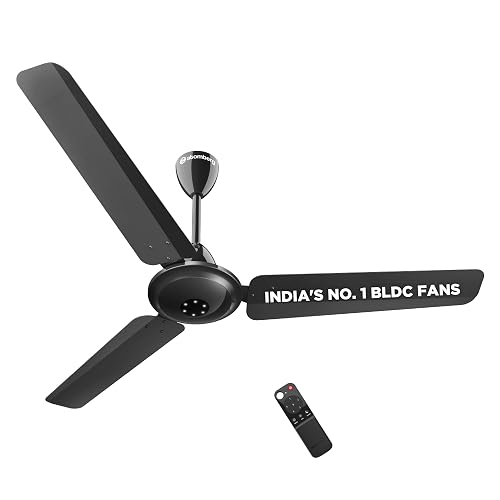 atomberg Efficio Alpha 1200mmBLDC ceiling fan with remote₹2,800Amazon, 8 Nov 2026★ 4.1Check price ↗
 Crompton Surebreeze Sea Sapphira 1200 mmCeiling fan for home₹1,500Amazon, 8 Nov 2026★ 4.0Check price ↗
 Orient Electric Apex-FX 1200mmCeiling fan for home, BEE 1 star₹1,400Amazon, 8 Nov 2026★ 3.9Check price ↗
The short answer
The one manufacturer cleaning guide we could source in full, Crompton’s, publishes a single procedure: power off, wipe the blades gently with a damp cloth, blow dust from the motor housing with compressed air. It names no chemical at all. The only service price we could source is a fan-count ladder starting at ₹238 for three fans, September 2026.
Why this page is shorter on chemistry than you expected
We went looking for what fan brands themselves publish about cleaning their own products, because that is the instruction that carries a manufacturer’s own name on it. The honest result: we found one full guide, from Crompton, and nothing from the other brands whose sites we checked this pass. So this page does two things. It reports exactly what that one guide says, marked as one source rather than a consensus. And it answers what a professional charges, wherever anyone publishes a number at all. That second half turned up a finding we did not expect about Urban Company.
What manufacturers publish about cleaning fan blades
Crompton’s own fan care guide, read 13 September 2026, is the only manufacturer cleaning guidance we could source in full this pass. Its Q&A carries structured FAQ markup, so those answers are the manufacturer’s own machine-readable statements rather than our paraphrase; the compressed air instruction in step 3 below is quoted from the same guide but not from that schema block. Everything in this section is that one source. It is not two manufacturers agreeing.
The published procedure, in Crompton’s own words:
- Power off first. “Always switch off power before cleaning any fan, including a BLDC fan. This ensures safety and prevents accidental movement while wiping blades or motor housing.”
- Blades get a damp cloth, gently. “Switch off electricity, use a stable ladder, and wipe blades gently with a damp cloth.”
- The motor housing gets compressed air. The guide’s method for the housing and crevices is compressed air: “Blow out dust from motor housing and crevices.” It publishes no prohibition on anything else for the housing, and its power-off answer refers to “wiping blades or motor housing.”
- Reach is a ladder question. “Yes, if your ceiling fans are mounted low, use an extendable duster. For higher installations, a stable ladder is safer to clean each fan properly.”
Crompton’s stated reason is airflow and motor strain, not appearance: “Cleaning removes dust that blocks airflow in ceiling fans and even a BLDC fan. Clean blades reduce motor strain, improving efficiency and maintaining consistent cooling performance.”
Note what is absent. That guide names no prohibited chemical, no prohibited material, and no different handling for painted, powder-coated or matte blade finishes. We looked for that specifically and it is not in the page we read. So the useful reading of “what manufacturers forbid on blades” is that we could not source a manufacturer prohibition to report to you. That is not the same as saying no manufacturer publishes one. It means the one guide we have does not.
Which chemical to use for ceiling fan cleaning
If you arrived looking for a named cleaner, here is the honest position.
The only cleaning medium named in the manufacturer guidance we could source is a damp cloth, for the blades, plus compressed air for the motor housing and crevices. No vinegar. No dish soap. No named commercial product. The guide simply does not go there. We treat that as a real finding rather than an oversight in our research, because the same page is detailed enough to specify ladder choice and power-off sequencing, and still declines to name a chemical.
Two things follow from that, and they matter more than a recommendation would.
First, there is no published finish-compatibility guidance to work from. We looked specifically for a manufacturer statement on whether a given cleaner is safe on painted, powder-coated or matte blade finishes, and found none. Anyone publishing a confident “best cleaner for fan blades” list is not sourcing it from the guidance we could find.
Second, on Colin specifically: not published. The manufacturer guidance we could source does not mention Colin and does not mention any branded cleaner at all. We could reason our way from what is in the bottle to a verdict about fan blades. We will not, because that would be our inference wearing a manufacturer’s authority. The accurate statement is the boring one: we searched for manufacturer guidance on Colin and fan blades, and found none published.
That pattern is not unique to fans: the appliance maker publishes a procedure, the internet publishes a chemical, and the two are rarely the same document. We apply the same sourcing rule in how to clean an air fryer and how to descale an electric kettle.
What professional ceiling fan cleaning costs in India
Here is what we could source on price, and what we could not.
A real per-fan ladder exists, from one provider. thecleaning.company publishes four fan-count tiers on its ceiling fan cleaning listing, read from the page’s own product data on 13 September 2026:
| Fans | Price, as published 13 September 2026 |
|---|---|
| Three ceiling fans | ₹238 |
| Four ceiling fans | ₹318 |
| Five ceiling fans | ₹398 |
| Six ceiling fans | ₹468 |
Band form: ₹238 to ₹468 for three to six fans, as of September 2026. The interesting part is the shape rather than the level, and the shape is not a single per-fan rate. Each fan beyond the three-fan base adds ₹80, then ₹80, then ₹70, computed from those four published tiers: 318 minus 238 is 80, 398 minus 318 is 80, and 468 minus 398 is 70. A strictly linear ₹80 ladder would have priced six fans at ₹478; the published six-fan tier is ₹468, ₹10 below that. Averaged across each tier, the price per fan works out to ₹79.3, ₹79.5, ₹79.6 and ₹78.0. Our reading of it: the three-fan base tier prices the visit, each fan after that is priced close to the same amount, and the sixth carries a small discount on top. One caveat we will not paper over: that listing does not name a city anywhere in the page we read, so do not read these as your city’s rates.
Urban Company has no standalone fan cleaning price, and that is the more useful finding. We navigated Urban Company’s fan cleaning paths for both Bangalore and Delhi NCR on 13 September 2026, and both showed a page-not-found error. What we found instead is ceiling fan cleaning appearing as one line inside a whole-home deep cleaning checklist: “Cleaning of doors, cupboards, handles, wardrobe exteriors, fans, lights, windows, railings, cabinets, and switchboards.” Those Bangalore packages ran ₹2,348 to ₹4,399 across six home-size tiers as of September 2026. So the answer to “what does Urban Company charge to clean a ceiling fan” is that we could not find a discrete per-fan price to quote you. On the pages we could reach, the fans are bundled into a whole-home job starting at roughly ten times the three-fan price above.
A third provider’s price could not be read at all. beegle.app lists a Bangalore-specific ceiling fan cleaning service, but its booking and pricing interface is built on a JavaScript app that showed no prices in the text we could read, so no price could be read.
Of the three providers we checked, one publishes a per-fan-count price, one bundles fans into a whole-home package, and one’s price could not be read at all.
Do BLDC fans need different cleaning?
A BLDC fan carries motor electronics that an induction motor does not. The reasonable worry is whether that changes the procedure.
Crompton’s guide answers this directly rather than by silence, which is why we can report it. It folds BLDC into the general case three separate times: “Whether standard or BLDC ceiling fan, regular maintenance protects performance”; “Always switch off power before cleaning any fan, including a BLDC fan”; and “Cleaning removes dust that blocks airflow in ceiling fans and even a BLDC fan.” That is an explicit manufacturer position that the same power-off, damp-cloth, compressed-air routine applies, not our inference drawn from an absence.
Two limits travel with that. It is one manufacturer, so it is a position rather than an industry consensus, and we could not source a second manufacturer’s cleaning guidance this pass to corroborate or contradict it. And the instruction to wipe the motor housing is published without any liquid-specific caution for BLDC’s onboard electronics. We are not going to invent that caution on a manufacturer’s behalf, and we are not going to tell you it is unnecessary either.
What we could not verify
Being specific about this is deliberate, not an apology.
- A second manufacturer cleaning guide. Every cleaning instruction above is Crompton’s, one source. Treat it as one source.
- Any chemical prohibition, or blade-finish compatibility. Searched for, not found in the guidance we could source.
- A manufacturer verdict on Colin or any branded cleaner. Not published in what we read.
- The service city for the ₹238 to ₹468 ladder. Not named on the listing.
- beegle.app’s actual prices, and two further providers, NoBroker and HomeTriangle, which we did not reach this pass at all.
- The cleaning interval, in the sense that the one source contradicts itself. See the FAQ below.
If you want to know how we decide what counts as sourced and what gets written up as a gap, that is set out in how we research.
Frequently asked questions
How much does it cost to clean a ceiling fan?
The one per-fan price we could source is thecleaning.company’s ladder: ₹238 for three fans, ₹318 for four, ₹398 for five and ₹468 for six, as published on 13 September 2026, which works out to ₹80 for the fourth and fifth fan and ₹70 for the sixth. That listing does not state which city it serves. Urban Company publishes no standalone fan cleaning price we could find: its fan cleaning paths for Bangalore and Delhi NCR both showed a page-not-found error on that date, and fans appear only inside whole-home deep cleaning packages priced ₹2,348 to ₹4,399 in Bangalore, September 2026.
What chemical can I use to clean my ceiling fan?
The manufacturer guidance we could source names no chemical whatsoever. Its blade method is a damp cloth, gently, with the power off, and its motor housing method is compressed air. We found no published manufacturer position endorsing or prohibiting any specific cleaner.
Can Colin be used to clean a fan?
Not published. We looked for manufacturer guidance naming Colin or any branded cleaner in a fan cleaning context and found none. We are deliberately not answering this from what Colin contains, because an ingredient-based guess is not a manufacturer’s position and should not be dressed as one.
How do I clean a ceiling fan without opening it?
The procedure Crompton publishes contains no disassembly step. It is: power off, stable ladder, wipe the blades gently with a damp cloth, and blow dust from the motor housing and crevices with compressed air. For a low-mounted fan, the same guide says an extendable duster works instead of a ladder, though it reserves the ladder for higher installations.
How often should a ceiling fan be cleaned?
The one source we have disagrees with itself on the same page, so we report both. Its FAQ says “clean ceiling fans monthly.” Its body copy says “clean every few weeks to prevent heavy buildup.” We are not picking one of those on the manufacturer’s behalf.