Difference Between Oven and Microwave: Which Should You Actually Buy?
 Glen 35 L OTG SA5035BLRCMulti-function OTG, 2100W, oven toaster griller₹6,600Amazon, 8 Nov 2026★ 4.0Check price ↗
 AGARO Marvel 48 L OTGOven toaster griller, motorised rotisserie₹7,000Amazon, 8 Nov 2026★ 3.8Check price ↗
 LG 28 L Convection Microwave MC2846BVConvection microwave oven, Health Plus menu₹14,000Amazon, 8 Nov 2026★ 4.3Check price ↗
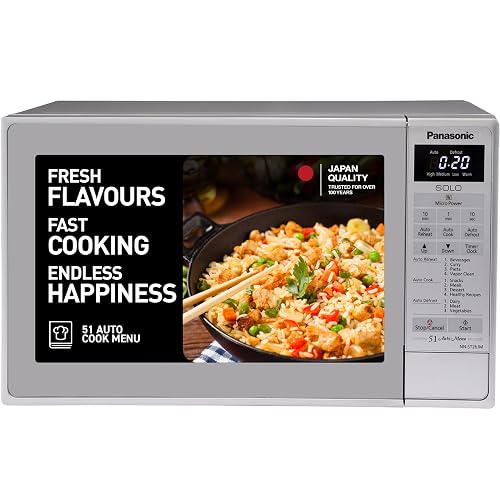 Panasonic 20 L Solo Microwave NN-ST26JMFDGSolo microwave oven, 51 auto cook menus₹7,000Amazon, 8 Nov 2026★ 4.3Check price ↗
Prices and ratings in the boxes above are Amazon selling prices read on 8 Nov 2026, rounded to the nearest ₹100. Products are the most-rated ones of each type that we found, shown as examples, not a ranking. Prices quoted in the text below are from the dates given beside them and may differ from today’s Amazon price.
The short answer
Choose a solo microwave if you mostly reheat leftovers, defrost frozen food, and warm milk, and never bake or grill. Choose an OTG if baking, grilling, and tandoori are your primary cooking tasks. Choose a convection microwave if you want reheating and occasional baking in one machine and your budget allows the ₹13,490 to ₹15,490 band (as of August 2026).
OTG, solo microwave or convection microwave?
In India the oven or microwave decision is three-way: OTG, solo microwave, or convection microwave. The convection microwave is the machine most shops actually push, so it gets equal weight here. This page treats all three as distinct machines with different heating mechanisms, capabilities, and price bands.
How each one actually heats
An OTG (Oven-Toaster-Griller) uses metal heating coils at top and bottom of its cavity. Current heats the coils, and radiant heat cooks food from the outside in, like a traditional oven. Some models include a turbo convection fan that circulates heat for more uniform baking.
A solo microwave uses a magnetron to generate 2.45 GHz electromagnetic waves. Water, fats, and sugars absorb these waves, causing molecules to vibrate and produce heat. Cavity walls reflect microwaves inward; a turntable rotates food to randomise standing-wave patterns and eliminate cold spots.
A convection microwave combines both: microwaves for inside-out heating, a heating element for browning and crisping, and a fan for even cooking.
The magnetron is a high-power vacuum tube. Electrons spiral through a magnetic field past cavity resonators; resonant frequency is set by their dimensions. In a microwave oven, a 1.1 kW input generally produces about 700 W of microwave power, an efficiency of around 65 percent.
What each one physically cannot do
The mechanism dictates the limits. A solo microwave excites water, fat, and sugar molecules; it cannot brown or crisp, because browning needs dry radiant heat the magnetron does not produce. It cannot bake, grill tikka, toast bread, or make tandoori, and it cannot run with metal containers, foil, or metallic-trim crockery, which cause sparks and can damage the magnetron.
An OTG has heating elements but no microwave source. It cannot defrost frozen meat quickly, because microwave penetration drives fast defrosting. It cannot pressure-cook or seal a moist environment. It needs 10 to 15 minutes to preheat before it starts cooking anything, so it is a poor fit for a fast reheating job.
A convection microwave does most of what both can, with compromises. Baking quality suits occasional rather than dedicated baking. The grill element is typically top-only and weaker than an OTG’s top-and-bottom setup, and the cavity is smaller than a typical OTG’s. Combo-mode wattage for standalone convection microwaves is not documented in our sources; Glen’s built-in models specify 900W microwave plus 1200W grill.
The capability matrix
Built from each machine’s heating mechanism, not from product tests.
| Task | Solo microwave | OTG | Convection microwave |
|---|---|---|---|
| Reheat leftovers | Yes | Yes | Yes |
| Defrost frozen food | Yes | No | Yes |
| Toast bread | No | Yes | Partial |
| Grill paneer, tikka | No | Yes | Partial |
| Bake cake, cookies | No | Yes | Yes, occasional use |
| Tandoori, kebabs | No | Yes | Partial |
| Cook rice, dal, curry | Yes | No | Yes |
Preheat times: convection microwave 3 to 5 minutes; OTG 10 to 15 minutes. Preheat behaviour for solo microwaves is not documented in our sources.
What it costs to run
Running cost depends on wattage and hours of use, not machine type:
kWh = Watt × hours of use ÷ 1,000
A 1,200 W appliance running for one hour uses 1.2 kWh. At Rs. 8/unit, that is Rs. 9.60. Run it for 30 minutes and the cost is Rs. 4.80.
A 2,000 W appliance used 2 hours daily consumes 4 kWh daily, roughly 120 kWh monthly, and about 1,460 kWh yearly. At Rs. 8/unit, the daily impact is Rs. 32, monthly Rs. 960, annual Rs. 11,680.
Average domestic electricity rates in most Indian cities fall between Rs. 6 and Rs. 8 per unit.
Applied to the three machines in this comparison, using published wattage figures where available:
- A 2,100 W OTG (35L Glen) running 1 hour uses 2.1 kWh, about Rs. 16.80 at Rs. 8/unit.
- A 900 W convection microwave, microwave-only mode on a Glen built-in unit, running 30 minutes uses 0.45 kWh, about Rs. 3.60.
- This page does not list wattage for the solo microwaves it names; the formula applies once you know your model’s rated wattage.
Which one to buy, by what you cook
Buy a solo microwave if your kitchen has a gas stove or induction cooktop, and you only need reheating, defrosting, and warming milk, never baking or grilling. Countertop solo microwaves among the models we checked sit in the ₹5,490 to ₹6,490 band (Samsung 23L, LG 20L, IFB 20L models), as of August 2026.
Buy an OTG if baking cakes, cookies, and bread, or grilling paneer, vegetables, and tandoori, is primary. OTGs among the models we checked run from ₹3,371 to ₹14,996 (Glen range, 9L to 60L cavity), as of August 2026. Popular 35L models with motorised rotisserie and turbo convection fan sit around ₹6,999, with 2-year warranty, as of August 2026.
Buy a convection microwave for reheating and occasional baking in one machine, accepting that its baking quality is rated below a dedicated OTG. Countertop convection microwaves among the models we checked sit in the ₹13,490 to ₹15,490 band (Samsung 28L, LG 28L, IFB 30L models), as of August 2026. Glen’s built-in range splits by feature: with grill, ₹29,996 to ₹38,246; with convection, ₹38,246 to ₹44,996, as of August 2026.
Decision rule: no baking or grilling at all, buy a solo microwave. Any baking, even occasional, takes a solo microwave off the list. Choose a convection microwave if reheating speed matters as much as baking. Choose an OTG if baking and grilling quality matter more than speed.
Buying a New Microwave Oven? Start Here
The full comparison is in Best Microwave Oven in India (2026), the HomeVerdicts guide to microwave ovens. These are the first two products in that guide; the guide compares all of them.
Amazon India prices on 31 October 2026, rounded to the nearest ₹100 (prices change often). As an Amazon Associate, HomeVerdicts earns from qualifying purchases made through these links.
IFB 24PM2S 24L Solo
24 litre capacity, 900 W microwave output
IFB 20PG4S 20L Grill
20 litre capacity, 1000 W grill
FAQs
Can a convection microwave replace an OTG for baking?
A convection microwave’s baking quality is rated “acceptable for occasional use” in our sources. An OTG’s is rated for a better crust and more even browning, from its larger cavity and dedicated top-and-bottom elements. For regular or dedicated baking, an OTG is the stronger choice. A convection microwave suits occasional baking where sharing the machine with reheating duty matters more than crust quality.
Is a solo microwave cheaper to run than an OTG?
Running cost depends on wattage and hours, not machine type. A lower-wattage machine running longer can match a higher-wattage machine running shorter. The formula kWh = Watt × hours ÷ 1,000 applies to both.
Can I use metal containers in a microwave?
No. Metal containers, foil, and metallic-trim crockery cause sparks and can damage the magnetron permanently.
How long does an OTG take to preheat?
OTGs among the models we checked preheat in 10 to 15 minutes. Convection microwaves preheat in 3 to 5 minutes. Preheat behaviour for solo microwaves is not documented in our sources.
What size oven or microwave do I need for a family of four?
OTG capacity among the models we checked ranges from 9L to 60L, with popular sizes at 25L, 35L, 42L, and 48L. Convection microwave capacity ranges from 20L to 35L. Solo microwave capacity in the listed models runs 20L to 23L. This page gives no size-to-servings figure for these models.
Conclusion
Oven vs microwave is really three separate choices: OTG, solo microwave, and convection microwave. An OTG heats with metal coils, a solo microwave heats with electromagnetic waves from a magnetron, and a convection microwave combines both plus a fan. Each machine has a physical limit on what it can cook, set by the mechanism, not the brand.
Solo microwaves never bake or grill, at any frequency, so that decision is fixed by the machine, not by how often you bake. For dedicated baking and grilling, buy an OTG. For reheating and occasional baking in one machine, buy a convection microwave, in the ₹13,490 to ₹15,490 band (as of August 2026), and accept its baking quality trails a dedicated OTG.
For adjacent decisions, see our guide to the best air fryer under ₹5,000 and our air fryer cleaning guide.